


In 1628, after 20 years of experimenting, William Harvey (1578-1657) finally felt confident enough to publish 'De motu cordis'. In this book Harvey described how the blood circulates through the body: that the blood travels through arteries to the different organs and returns to the heart via veins. Although at that stage he was unable to see them himself he postulated that the blood passes through tiny capillaries allowing the transition from arterial to venous phase. Also, he described the small circulation from heart to lungs and back. He realised that the small and large circulation are separated only by the heart septum which therefore cannot be permeable to blood.
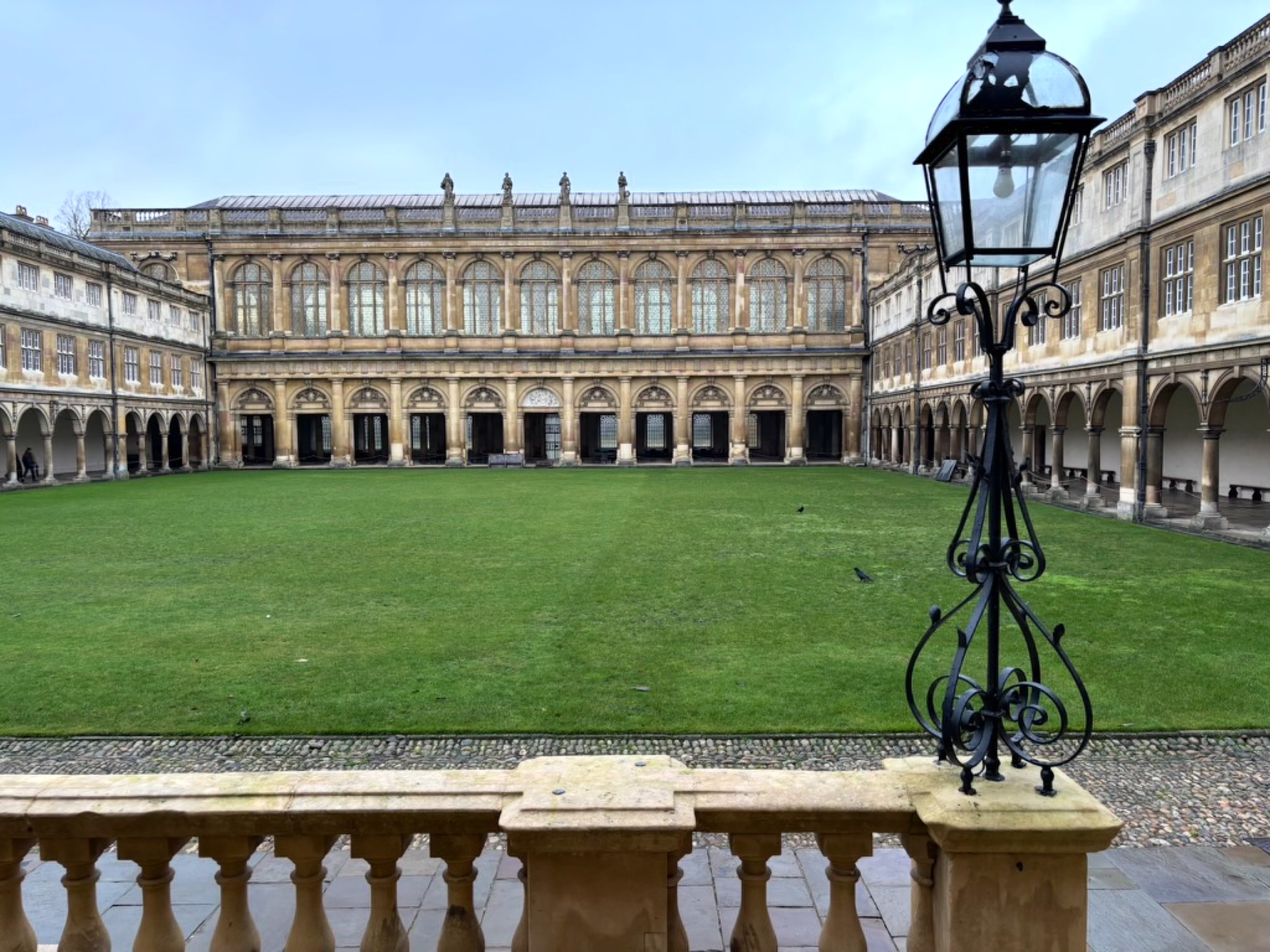


A first edition copy of Harvey's book is housed in the Wren library of Trinity college, Cambridge UK. Upon making an appointment, this Latin-language copy can be consulted.
In addition to the patented PaR-technology, which is convenient when both flow velocity and arterial blood pressure signals are available, a new technique for the analysis of flow velocity alone was published in 2012. This technique proposes the use of new parameters for the numerical representation of pulsatile signals in order to better represent it's hemodynamic properties.
- Schaafsma A. Improved Parameterization of the Transcranial Doppler Signal. Ultrasound in Medicine and Biology 2012; 38(8): 1451–1459.
These parameters are based upon the Theory of Arterial Acceleration.
- Schaafsma A. Harvey with a modern twist: How and why conducting arteries amplify the pressure wave originating from the heart. Medical Hypotheses 2014; 82(5): 589–594.
The first clinical study making use of these new parameters was published in 2017
- de Goede A.A., Loef B.G., Reidinga A.C. and Schaafsma A. Fluid resuscitation in septic patients improves systolic but not diastolic middle cerebral artery flow velocity. Ultrasound in Medicine and Biology 201; 43: 2591-2600).
A new method for age correction and graphical representation of the new parameters was published in 2018
- A. Schaafsma, A new method for correcting middle cerebral artery flow velocity for age by calculating Z-scores. Journal of Neuroscience Methods. 307, 1–7 (2018).1.
Applying age corrected Z-scores for the analysis of changes in middle cerebral artery flow velocity after carotid endarterectomy was published in 2021
- M. Schaafsma, G.J. Glade, B.J.A.M. Keller, A. Schaafsma, Age corrected changes in intracranial haemodynamics after carotid endarterectomy. J. Cardiovascular Surgery. Aug 2021; 62(4):354-363.
Applying PaR ratio for the detection of increased intracranial pressure in patients with traumatic brain injury
- Brasil S, Romeijn H, Haspels EK, Paiva W, Schaafsma A. Improved Transcranial Doppler Waveform Analysis for Intracranial Hypertension Assessment in Patients with Traumatic Brain Injury. Neurocrit Care. 2024: 40(3): 931-940.
Explaining why middle cerebral artery flow velocities decrease with age: arterial dilatation. Providing age corrected normal values or Z-scores for middle cerebral artery flow velocity.
- Schaafsma A., Molanus L., Rooijen GJ van, Vascular aging entails arterial dilatation in addition to increased arterial stiffness. J. Vasc. Ultrasound 2024: 48(3) 141-149.
Explaining how middle cerebral artery flow velocity changes during hyperventilation and CO2 retention.
- Chan N., Mulder R. and Schaafsma A., CO2 reactivity in Brain Relies on Blood Pressure Regulation as well as Arteriolar Vaso-reactivity. J. Vasc. Ultrasound 2025: 49(3):130-137.
Explaining the implications of the theory of arterial acceleration for TCD monitoring in patients with severe traumatic brain injury.
- Schaafsma A. Theory of arterial acceleration: implications for Doppler monitoring in patients with severe traumatic brain injury. Frontiers in Physiology 2025: 16: 1654072.

The Neuromon approach is centered around the Theory of Arterial Acceleration that was published in 2014.
Subcategories
-
IAG

In 2007 Neuromon BV was supported by a grant from the Innovative Action Programme Groningen and the EU.
-
Eureka label

For it's innovative work and collaboration with international partners Neuromon B.V. received the Eureka! label from the EU
-
Collaboration

To the benefit of patients on the Intensive Care Neuromon B.V. has joined forces with Compumedics DWL.